
Nature-Based Solutions on Farms: Bridging the Gap Between Environmental Benefits and Economic Realities
An article by Fridah Silas, PhD student in the School of Environment, Resources and Sustainability and Collaborative Water Program; Supervisor: Dustin Garrick
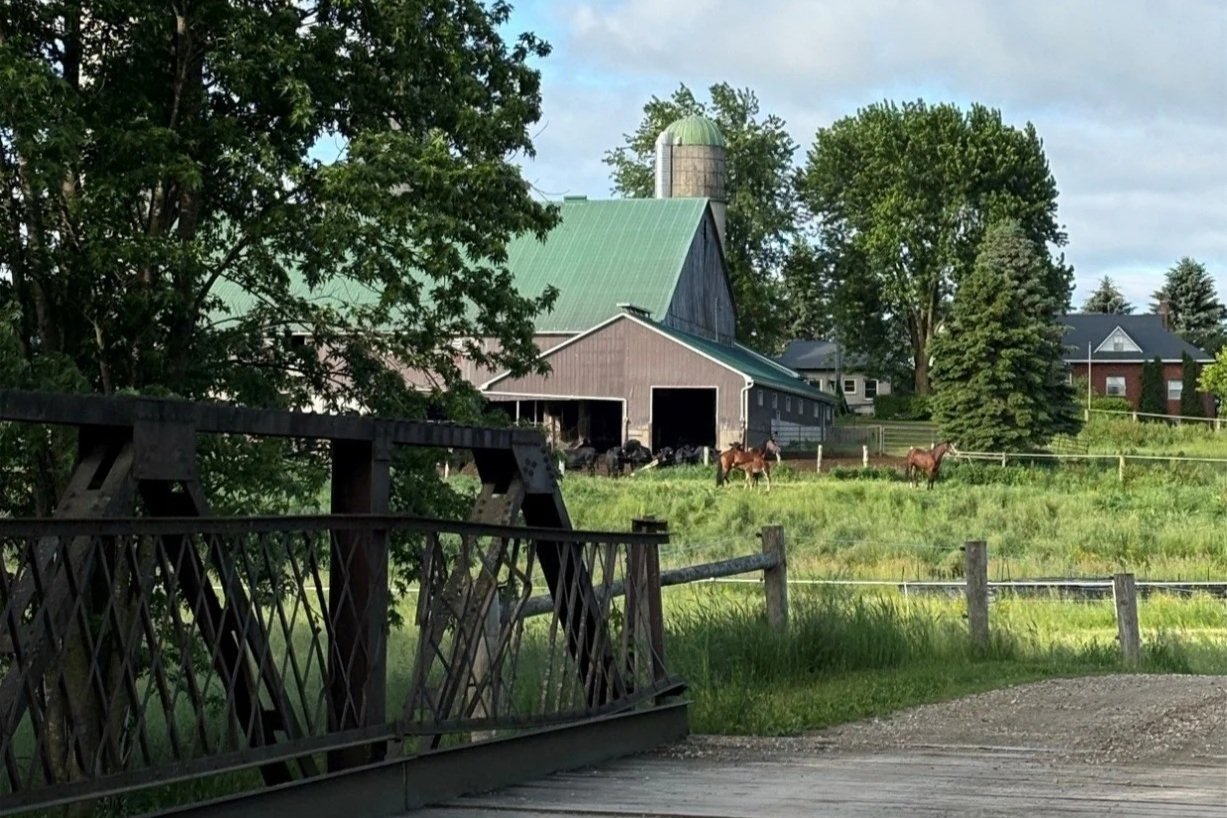
The future of sustainable agriculture will depend less on convincing farmers of the long-term value of nature-based solutions (NbS) and more on ensuring they can afford the short-term costs of implementing them. Across Ontario, farmers are already leading the way in adopting practices that deliver benefits for water quality, climate resilience and biodiversity conservation, while feeding communities and supporting local economies.
Silas' research examines the governance of nature-based solutions in agricultural landscapes, with a particular focus on the barriers and opportunities that influence farmers' stewardship decisions. As part of an exploratory phase of this research, he conducted interviews with farmers across the Grand River watershed to better understand their experiences, perspectives, and the institutional support available for adopting nature-based solutions. This work was undertaken under the supervision of Dr. Dustin Garrick, with guidance from committee member and Assistant Research Professor Dr. Graham Epstein in developing the research design and interview instruments.
Source: Dustin Garrick
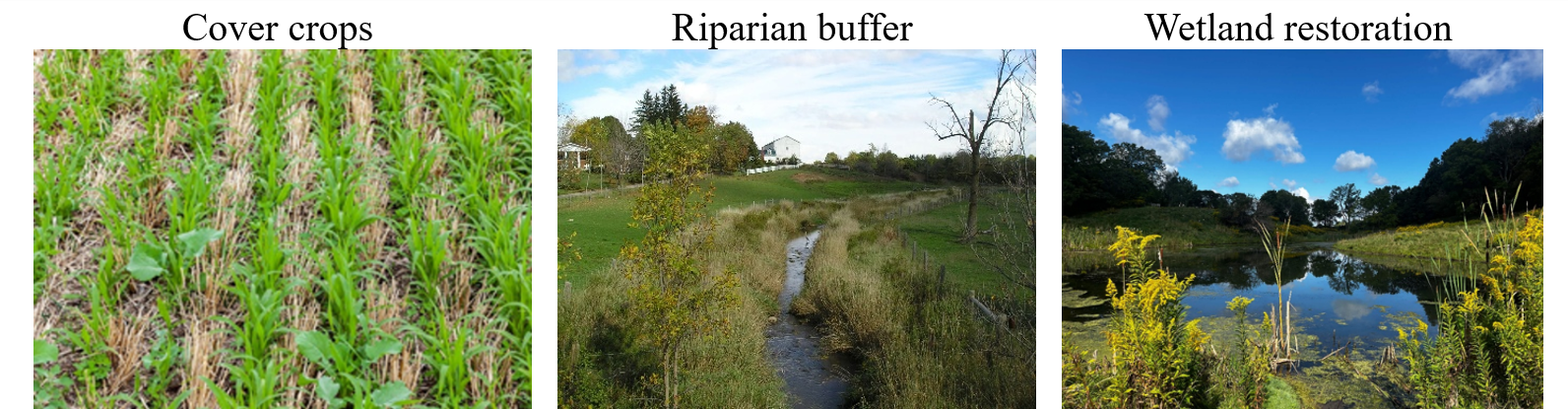
One area where NbS have delivered value for farmers and the environment is nutrient management. Excess nutrients, mainly phosphorus and nitrogen, can leave fields through runoff and drainage systems, and contribute to water quality challenges in downstream ecosystems such as rivers and lakes. Many Ontario farmers are implementing practices such as cover cropping, riparian buffers, wetland restoration and complementary nutrient management approaches collectively known as 4R Nutrient Stewardship. These practices ensure that nutrients remain on the farm where crops can utilize them, thereby reducing losses to surrounding water bodies.
Source from left to right: Ontario Federation of Agriculture, Hamilton Conservation Authority, Lower Thames Conservation Authority
Despite these benefits, implementing nature-based solutions often comes at a significant upfront cost for farmers. For example, to plant cover crops, farmers pay for seeds, field operations, and incur costs when terminating the crops before planting the next cash crop. Establishing riparian buffers requires an even greater sacrifice. Farmers retire a portion of their productive land from annual crop production to create vegetated buffer strips along waterways. They also incur establishment and maintenance costs, leading to reduced short-term revenue. Wetland restoration, one of the most cost-effective NbS for nutrient management, can also reduce farm income by taking productive land out of agricultural production.
While each of these NbS offers a unique approach for improving long-term nutrient management on farms, there are at least two important mismatches related to the benefits and costs of implementing these solutions. First, while the costs of implementing NbS are felt immediately, it can take many years for farmers to realize the benefits of these investments. Second, while farmers accrue some benefits from NbS, the largest benefits accrue to other downstream users who benefit from clean water for drinking and recreation, yet farmers remain responsible for much of the upfront financial costs. For farm businesses operating in increasingly uncertain economic and climatic conditions, patience is not always a practical business strategy. Farmers must maintain profitability and remain competitive even as they invest in environmental stewardship.
Despite these challenges, farmers continue to demonstrate their commitment to environmental stewardship. Many work closely with Conservation Authorities and organizations such as the Ontario Soil and Crop Improvement Association (OSCIA) who provide technical guidance, extension services and financial support to implement the practices. Cost-share programs such as the Resilient Agricultural Landscape Program, delivered through OSCIA, have significantly helped to reduce the financial barriers. However, farmers frequently report that funding is exhausted shortly after application opens, leaving many willing participants without support.
The challenge, therefore, is not a lack of commitment or motivation from farmers to implement NbS. Rather, it is ensuring that the economic realities of implementation align with the environmental benefits these practices provide. As many farmers point out, stewardship and profitability are not competing goals. However, for nature-based solutions to achieve widespread implementation, farmers need predictable and accessible support that recognizes the costs farmers incur while delivering benefits to society.