
Behind the Mic: The Making of the Solutionscapes Podcast
An article by Jeff Liebert
Climate anxiety has a way of lifting when you start looking at solutions instead of just problems. That's the premise behind Solutionscapes, a podcast mini-series that took listeners into wetlands, farm fields, and biodigesters across Canada to ask: What does it actually look like when scientists design for integrated solutions from the start, instead of bolting them on at the end? Over four episodes, host and podcast creator Charlotte White sat down with researchers from the University of Waterloo and University of British Columbia — Nandita Basu, Tonya DelSontro, Jeff Liebert, Kushank Bajaj, Nettie Wallace, and Savannah Bindas — to talk wetlands carbon cycling, sustainable agriculture and cover cropping, and creating renewable energy from manure. But what does it take to turn a handful of research interviews into something people actually want to listen to?

From recording interviews and narration to editing, sound design, and fact-checking, Charlotte White turned hours of research conversations into Solutionscapes, a four-episode podcast mini-series on landscape-based climate solutions. Photo: Will Francis (Unsplash).
Before a single question gets asked, there's a concept to nail down. For Solutionscapes, that meant choosing a narrative thread — landscapes as the connective tissue between water resources, food production, and energy systems — and identifying which researchers across the project's three pillars (wetlands, agriculture, and bioenergy) could speak to it. From there, every episode required digging into each guest's published work in order to ask informed follow-up questions, from carbon mass balances to machine learning models for cover crop placement, before interviews were actually recorded. Charlotte’s narration was often recorded separately from the conversation itself, a technique that lets transitional context — framing why a topic matters, translating jargon, connecting one guest's point to another's — get woven in later rather than improvised on the spot. This narration work is where a lot of the "science communication" actually happens.
Once the raw material exists, it has to be shaped: editing trims the audio and interweaves narration with interview clips so the pacing doesn't lose listeners in run-on technical explanations, while sound design layers in music, sound effects, and transitions to give the episode a consistent identity. Episodes typically loop back to guests or other experts for a fact-check before release, and only then are they published alongside supporting material, such as show notes, transcripts, and links to the underlying research.
Why does any of this matter? Because the science in Solutionscapes — wetlands as both carbon sinks and methane sources, biodigesters that cut emissions but may increase nitrogen leaching, cover crops with real yet context-dependent benefits — is exactly the kind of nuanced, trade-off-laden research that rarely survives translation into a soundbite. Podcasts give it room to breathe. They provide time for a researcher to walk through a "yes, but" answer, space for uncertainty, and a format people can absorb while doing something else entirely, like taking that anxiety-reducing walk outside.
Solutionscapes was supported by Environment and Climate Change Canada. Listen to full episodes at [www.solutionscapes.ca].
Personal note
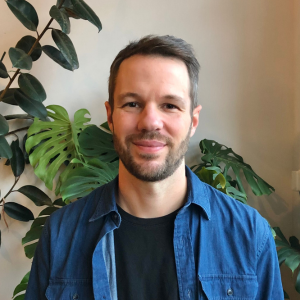
Jeff Liebert is an NSERC Postdoctoral Fellow in the Institute for Resources, Environment and Sustainability where he is a member of the Land Use and Global Environment Lab. Drawing on interdisciplinary training in natural and social sciences, Jeff is currently using machine learning to generate spatially explicit predictions of cover cropping co-benefits, coupled with an assessment of policies and other institutional efforts to increase the use of agroecological practices. Jeff is also comparing global case studies to evaluate how lock-ins and path dependencies can make agriculture and food systems resistant to change. Jeff is motivated to find context-specific, collaborative approaches to path breaking/making in pursuit of more sustainable and just agri-food systems.